Help us become the #1 Data Podcast by leaving a rating & review! We are 67 reviews away!
🎓 Want the FREE training Jorge watched before joining? 👉 https://datacareerjumpstart.com/training
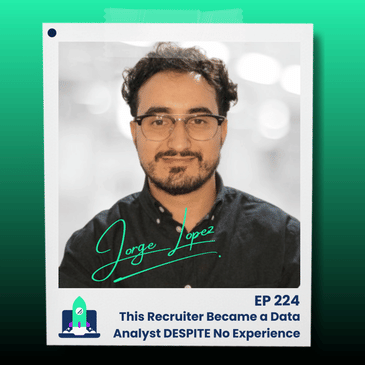
Jorge was getting 12 rejections a day. I found out what he changed to turn it around.
💌 Join 33k+ aspiring data analysts & get my tips in your inbox weekly 👉 https://datacareerjumpstart.com/newsletter
🆘 Feeling stuck in your data journey? Come to my next free "How to Land Your First Data Job" training 👉 https://datacareerjumpstart.com/training
👩💻 Want to land a data job in less than 90 days? 👉 https://datacareerjumpstart.com/daa
👔 Ace The Interview with Confidence 👉 https://datacareerjumpstart.com/interviewsimulator
⌚ TIMESTAMPS
00:00 – Call centers to AI team
05:36 – Why he quit the Google cert
12:39 – The internal pivot
15:45 – 12 rejections a day
20:51 – Applied for a different job
25:30 – Networking on LinkedIn
🔗 CONNECT WITH JORGE
🤝 LinkedIn: https://www.linkedin.com/in/jorge-lopezvelarde/
🔗 CONNECT WITH AVERY
🎵 TikTok
💻 Website
Mentioned in this episode:
October Cohort of The Accelerator Starts on October 12th
Land your first data job ASAP with The Accelerator. And for this cohort only, get a discount PLUS our premium job board software PLUS our live AI workshops on how to analyze data Learn more here: https://datacareerjumpstart.com/daa
https://datacareerjumpstart.com/daa
Live "How to Become a Data Analyst" Webinar
Come learn the EXACT roadmap to landing your first data job: https://web.datacareerjumpstart.com/webinar
And then I just cried, you know? I was, like, handling, like, 12 rejections a day for, like, a month, and then I changed it and it got better. So I think self-taught is a fallacy. The role that I applied for was nothing to do with this job title. Okay. 'Cause you only need one impression to get the job. You need to say yes to jobs that you're not gonna love them. You were able to transform your career from kind of this call center HR career into this data and AI career in about a year. I wasn't expecting that at all. Hey, guys. It's Avery, and that guy you just heard from is one of my students, George Lopez. And a year ago, he was literally answering phones in a call center, getting rejected from data jobs, like, over a dozen times a day. Ready to quit, absolutely miserable. And today he works for an AI and data team for a US company living in Mexico, and the job he landed wasn't even one that he applied for. In this episode, he breaks down exactly what he changed on his resume to start getting interviews, why he thinks self-taught data analysts is a fallacy, and how he turned utter rejection into an offer. If you're trying to get into data, this is a great episode to listen to to get the playbook. Let's go ahead and get into it. All right, George. So you were able to transform your career from kind of this call center HR career into this data and AI career in about a year through the data analytics accelerator program without having, like, a real a- IT degree or previous IT experience. Walk me through your whole journey in this episode. Let me know, like, how you got from, from A to B and how other people can do it. Let's start with, like, you know, your first job li- like you were actually working at. You were working in call centers. Tell me what that was like and then how you ended up in HR. Yeah. So I worked for all American companies since I'm 18. Got my first job at 18 working for MetroPCS customer service. It sucked, just being honest. Um, then I moved to AT&T tech support, um, car rentals with Avis and Budget, and then I did a little bit of sales, um, sale call center work. Then I did, um, collections for a Long Beach company, um, more in the finance side of the industry, but still kind of call center. After that, I started as a recruiter for a call center, of course, for about a year. After that, I was promoted to HR, same company. Um, and couple months later, I landed a, a remote job, still HR, but for a US company. Um, and I learned a lot in that job. I worked there for almost four years. Um, and part of that is that, you know, I started as an MSP, which is a managed service provider. Then I transitioned to a billing analyst position, of course, which, um, we can talk a little bit more about that. Um, the course really helped me out because I really sucked at Excel. And that's, like, my main expertise right now Very cool. So you went from, yeah, I don't think anyone would necessarily say that call centers are super fun. So you went from this, this sucky job to you, you landed this billing analyst role, which is your first step into the data analyst world. Um, you were there for a little bit, and then most recently, as of recording, you just started this new job, which is this, this project coordinator role with this generative AI operations team, um, that, you know, you just started about, uh, which is really exciting. So like you're in the data and AI space, you know, out of nowhere overnight. It really wasn't that, that way, and we'll talk about that. It took a lot of effort on, on your end, and it took about, you know, nine months-ish to a year of actually like putting in the work to, to get there. Uh, we should also mention that you're, you live in Baja, California in Mexico, and you've been working, uh, these, these two data jobs are with American companies, with US companies. So, uh, that's, that's really impressive. I guess at like what point did you decide that you were interested in data and AI and analytics? Because you, you really had this HR career. You were a recruiter. Uh, at what point were you like, "Oh, I wanna be a data analyst"? Because at work, I was the go-to person for the system, for our vendor management system. Uh, we did a lot of reports. Uh, we have something called xAG, which is built in with Power BI. That was like my first interactions b- beyond, you know, downloading a report and deleting columns, applying filters and whatnot in Excel. Um, that helped me out because I automated the process by just using the system as data that I cre- I created, but like scheduled reports with sp- specific filters that will be sent, um, automatically via email to managers or the client, you know. Let's say first of every month you will have a negative turnover r- report with specific filters, which will be the first day of the previous month, and the last day of the previous month will be sent on the first day of every month so that it's a monthly report of turnover. So I was playing with the system. I was like, "Huh, this is interesting, you know, how we can project what's going on, the patterns, what it means. What can we do about it?" Because at ease, you know, at first glance, you don't really know what's going on until you download a report and start scratching. Hmm. Very cool. I think a lot of people can probably relate to that. They're like, they're in their, their career, they're doing this job, and they're like the more organized person, the more analytical person, the more systems person doing the work. And it's like, "Oh, I actually really like this, and I'm kind of good at it." So that led you to, to data analytics. You're like, "I wanna pursue, you know, becoming a data analyst, um, in, in my career." And eventually, you, you found me. Um, was it via YouTube, or was it via the podcast or LinkedIn? Do you remember even? It was YouTube at first. So it was because I wanted to enroll. Why I technically enrolled on the course were Google data analytics. Um, I started it, like, af- after, like, an hour I was like, "What the heck is this? This is just multiple choice questions." You know? I wasn't learning, I'm sorry for my French, shit. I wasn't learning anything, you know? Um, and I was like, "What else can, can I see?" You know, I was like, "Wait." So I, I Googled is a Google, um, course, like, worth it, and then you popped up. Okay. Yeah, I definitely have done, uh, an episode or two about the Google data analytics certificate. Uh, which I basically say the same thing. I say, "If you want a really high level overview of analytics with people asking..." Not even people, just a computer asking you multiple choice questions that don't actually get you much hands-on experience, then sure, it's for you. I think in that episode I actually count how many different sequel queries you write, and it's, like, 20 different sequel queries that you write in a six-month period. And it's like Guys, come on. We can do faster. We can do more than 20 SQL queries in six months. We can do, you know, 40 SQL queries in six weeks. Like, we can definitely, you know, quadruple the pace at least. So, uh, that's one of my arguments, you know, for the accelerator. Okay, so in that video I'm like, "Okay, the ac- you know, the Google Data Analytics Certificate is fine, but it's not really gonna help you land a data job. If you want help to land a data job, you should do the SPN method. You know, learn the skills, build projects, uh, grow your network. If you want to do that with mentors and with friends, you know, come and join the Data Analytics Accelerator, um, and do it with me, and I'll teach you everything I know and help you land a data job." So you, you hear that, you know, that whole pitch, and, uh, tell me, I guess, like what was your thoughts on it? Uh, and then I guess you can tell the story of, of how you made sure that it wasn't necessarily a, a scam. Um, it's pretty funny. Um, so it was like some type of demo, right? You were... It was a video, and there was like a chat- a chatbot, what I thought was a chatbot. Um, "If al- if you have any questions, just let us know." And I was chatting, and then I watched the entire video, and I was asking a lot of questions. And then you were saying it was you, you know, the one that was answering m- my messages. So I was like, "Prove it," you know? Like, "Send me a picture so I can know that it's you." And you send me a video of you, like, getting ready and having a burrito heated in, in the microwave. I wa- I was like, "Okay, so this guy is eating a, a burrito. That's fine." And I swiped my credit card, and was a great investment. Wait. Okay, yeah. Now I remember what you're talking about. Yeah, so you joined. I do, like, a, a free training. We'll have a link in the show notes down below where, uh, like you join, and I basically give you this one-hour training of how to become a data analyst. And in there, a chat widget that, that goes to my Slack. And so if I'm available, I respond via Slack, right? If I, if I'm not available, I don't respond. Okay, and so you're like, "Is this AI or is this Avery?" And it ac- Yeah. And that's how I proved. Okay. Good I was eating a burrito that day. I've gotten more into Asian bowls recently in the microwave, but. Same. Okay, so then you join the accelerator, so you're in, you're in our boot camp, and I guess what, what did you feel like you got out of the boot camp? I know that you, you mentioned, like, you feel like Excel, your Excel skills were, were still a little bit weak. So in module two, right away, we build a project on some sales data using Excel. So did you find that whole module pretty helpful? Yeah, it was pretty helpful, but I think the most helpful was actually having someone, like, to ask a question, to get good mentorship. Like, Trevor was amazing. Um, Isaac was amazing. You were amazing, too. Um, and I think that's a lot of value, because I can just send a WhatsApp message and get an answer, right? Like, "Hey, I'm stuck here," or, "Hey, I'm applying to this job." What should I do? Get prepared for the interview, like practical interviews, stuff like that. So you f- Um- You found the mentoring to be, to be the most helpful. Yes. I'm not self-taught, really. Um, I'm not really self-taught. I need to be held accountable by somebody. Maybe there's people that they're self-taught and they watch hundreds of YouTube videos and they be- become experts. I tried, I failed. Um, but just, like, actually getting that motivation to do something, not just say that you want to do something. Like, do it and then say whatever, but try it at least. Mm. I, I love the humility that, that you have to say, "I'm not self-taught." I don't think I'm self-taught- No either. I think I've had an episode where I say, "I think self-taught is a fallacy," and it's... People wear it as a, a badge of honor, and it's like, why is that cool? Like, oh, so you spent a lot of time learning something you could have learned faster on your own? Like, good for you. Like, there's no award in life that actually, like, that makes you... Like, it makes being self-taught worth it. And also, I don't think there's anything really truly self-taught, 'cause it's like you learn from somewhere, like, whether it was a, a, a boot camp- Somewhere, someone yeah, a university. It's not like you just sat down and you were like, "God of data, please teach me how to make tableau charts," and then poof, you, like, figured it out, and I guess even then that was God. So I don't know. I, I, I tried it and I failed, so I know. I, I love that. Um, I'm curious, so in the Accelerator, uh, we have a couple different ways to, to get help. We have an AI bot in the program- Mm that's trained on our lessons. We have our community forum where you can ask questions. We have comments on all of our technical lessons where you can, where you can ask questions. We have the live office hours. We have email support. Um, which one of those did you take advantage of? Uh, all of them, any of them? Which one did you like the most? All of them. Like, all of them, but the best was for sure the weekly meetings. Um, I forgot the name of the- Yeah, just office hours the weekly office hours. Yeah. Yeah. So that was the best, and just also chatting, like, one-on-one with Trevor helped me out a lot. Um, also, um, sharing questions, posting my overall... Because just so you know, if you look at my social media, I don't post shit. I just share memes. That's all I do. Um, so it was really hard for me to, like, start- Doing stuff like interacting with other people on LinkedIn, that was like the hardest for me beyond learning how to code or to use Excel, honestly. Okay, very cool. That's, that's awesome to hear. Yeah, I, um... You, you were pretty-- I mean, you, you were pretty decent at, at posting inside the community and asking us questions and sharing with, with everyone. One, one of the things, one of the posts I, I pulled up from you, um, was when we first rolled out our AI support tool, um, inside of the program. Uh, that helps... One of the things it helps you do is, um, rewrite your resume bullets. So y- the title of the post was "Use the Data Fairy Tool If You Haven't, uh, Yet," and you mentioned that you were applying to a lot of jobs but not getting a ton of responses. Uh, and then you used Data Fairy to highlight your previous experience and how that adds value to a data analyst role. Um, "Surprisingly, I started receiving emails from recruiters wanting to schedule interviews. This week I have six interviews lined up. I'm currently on module five, and even if none of these interviews lead to an offer, I'm in a much better place than I started." So, um, that's super good, good to hear that, that, that tool was useful, uh, for you. I'm curious, so you're, you're applying to roles, you have this HR experience, you know, you're, you're trying to revamp your resume using some of the AI tools that, that we have here. Tell me about, a little bit more about the journey that eventually, you know, led you from this HR role to landing a billing analyst role internally inside of your company, which is one of the things we talk about in module one, where like one of the best things you can do is transfer internally. Talk through like how that process was and how you actually landed that, your first data job. Yeah. So I was doing a lot of reporting, like maybe like 12 reports every week, right? Um, manual reports and scheduled reports and whatnot. Um, then I had my yearly review with the director of operations for Global Business Services. Um, and I was just talking to him, "Hey, what, what's the next step? I've been here for three years now. How can I grow?" Right? And I've been asking that question for like over a year and a half. And he was saying, "Oh, it's because there's not a lot of, or any, um, open opportunities. Like right now we're looking for a billing analyst that can know how to use Excel and this, this, this and that." I was like, "But I know how to do that." And he was like, "Oh, really? How did you learn that?" And I was like, "Well, I did a, like a bootcamp and learned, I learned a lot. I learned about Python, about R, SQL, Tableau, advanced Excel skills, to if I'm, if I'm honest." Um, and he was like, "Oh, really? I didn't know about that." And the reason why is because they don't update the resumes. Like the resume that I applied for on that job back in 2023, they will still use that for internal purposes, but that's not who I am anymore, right? Um, and then I got a, an interview. They're corporate, by the way. Um, then I got another one, and then I got the job and they were asking me, "How do you see yourself in five years?" And I s- said, "As a solutions architect." And they were just saying, "Oh, I just want to confirm that I'm investing in the right person." Right? But that really helped me out. I did a lot more of Excel work, lots more of audits. Um, they actually have daily SQL integrations with like Workday, um, on a daily basis, and you will see errors and you will then fix them. Okay. Awesome. So at that role, um, you were using Excel, uh, quite a bit, and I also saw some Power BI on your resume as well. Was that more for like the reporting side of things? Yeah. Um, it's just so, so much data, like for different clients. Like I will audit six different accounts, six different clients, different industries. Like all these different exceptions- Pay policies, states, exemptions, markups, you name it. I don't wanna bore you with this. Um, but if you don't use something that will make it easier for everyone to understand, then what's the point, right? You can have a really nice dashboard, but if nobody understands what you're trying to say, then what's the point of the dashboard? Yeah, 100%. You know? You mentioned a lot in the community, um, and from me and you just talking recently that, you know, sometimes you were struggling to land interviews and sometimes you had a lot of interviews. Um, what do you feel like the biggest difference, and maybe also from your recruiting experience as well, like actually looking at resumes and applications and stuff like that, what do you feel like was the biggest experience going from not getting interviews to getting interviews? Like, what changed? What were you doing differently? The format. The Data Fairy and the template that you shared with us, um, it's really cool because it highlights what you have accomplished, your achievements, not just what, what you did, right? And here in Mexico, many other countries do it as well, we have our picture, we have images, we say Excel. So it was a bit weird overall because I was applying to jobs and I was just getting rejected over and over. I was, like, handling, like, 12 rejections a day for, like, a month, and then I change it and it got better. Wow. So really it was just, like, resume formatting, switching to one of the, the resume templates that we give you, and then what's the resume content, like the bullet points essentially, like making sure that the bullet points on your resume are tying closer to, like, data analyst roles. Yeah. For example, um, the whole thing that I talked to you about, about scheduled reports, about, um, monthly business reviews, client-facing, like what I did with that, how I reduced errors by 45, 50% on the billing side and also like data-wise. Like if somebody is working remotely but they're based in, let's say, California, but the job is in Oregon, then the pay policy should be different, right? Um, instead of weekly 40, it should be daily eight. So you know, if it goes like that for about six months it will be like a big impact for the company. Funny, it's funny that you say that because, um, you know, one of the things if I go to your LinkedIn and I scroll all the way down, well the first job I see is, is QA analyst. And I don't know if that's actually what your exact title was back then, um, but we had an interview that we did with Jen Hawkins who landed a job at Apple, and everyone went to her LinkedIn page and looked at her experience and she's like... And they were like, "You didn't help her become a data analyst. She's already been a data analyst for years." And I'm like, "You guys, that's like the exact point. Like that's the whole reason like the accelerator worked is we did such a good job at disguising her past experience to look like they were data analyst roles and that's why she was able to land data analyst interviews and actually land her true first data analyst role." So it's like if you could actually change your bullet points and even your titles to sound more data analysty, that's how you land more data analyst interviews and that's how you actually get your first real data analyst job. And, and if someone looks at their, your resume or your LinkedIn and they're like, "This person's been a data analyst for years," that's how you know we did a good job of, of disguising the resume. So s- that makes a lot of sense. Um, I'm curious though because like there were some times where you weren't, you know, like you said, you were applying, you got like 12 rejections a day. How'd you stay positive during all of that? I didn't stay positive. That's the thing. Um, it got me down. At w- at what point, I didn't apply to any jobs for about a month. I was like, "What's the point of applying if I'm gonna be rejected either way," right? Um, I used that time to, like, improve my skills. Um, and one thing that I can tell you that helped me out the most from DAA was learning the structure of making a good project overall. Like, yes, we make projects in Excel, in Tableau, and different tools, SQL too, but if we add our own spice to it, you know, our own signature if you wanna call it, like something that you, you like. I like, I like soccer. We call it football here, but I'm, I'm just call, gonna call it soccer. If you do something related to soccer or something to turn over something that you- you're actually passionate about, about like, "Hey, why were so many layoffs between 2024 and 2025? What was the main change? What happened?" You know, between '23 and '24 and '25. And, you know, looking at those pa- uh, at those patterns, I don't have, like, a live project portfolio for those specific projects, but I will share those projects according to the job that I was applying for. I was like, "Okay, if I'm applying to HR, I'm just gonna have HR and payroll projects. If I'm applying to more data, I'm just gonna add, you know, data projects about stuff that I'm actually knowledgeable about," like Pokemon cards or, you know, soccer, sports, stuff that I actually like, and I kinda made it like a hobby of mine. Um, you're mixing a hobby that you're passionate about with what you're learning, so that way it's, like, the best mix to learn. Yeah, I mean, that was, that was well said. That's like in- inside of the accelerator we have like a mini course called, like, Data Project and Portfolio Bible, and that's, like, better than the way I say it in the lesson in there where it's like, "Yes, we do all these projects inside the accelerator. You know, you should use those. You sh- those are good projects, but the best projects are the ones that you're going to create on your own. And hopefully after we've walked you through the steps of how to do a project, how to do the write-up, how to publish it and all those things, you'll be able to do them on your own a lot easier." And specifically you do that at the end with your capstone project, and those are the projects I think that really make you stand out. Um, and like you said, they're the ones that are more fun, 'cause it's like I'm not part- like, one of the projects we do i- in the accelerator program is, like, World Bank data, and it's like I'm not really passionate about World Bank data. And I'm glad that I have that on my, my portfolio, but it's like I'm much more interested in, like you said, Pokemon cards or sports or something, you know, more up my alley. And I think recruiters can really see that passion, that passion as, as well when you're actually applying. Okay. Now tell me, like, how you actually landed this role that you, you just started the other day, like with this AI data company. Tell me, like, how did you actually... Did you find them? Did they find you? What was the interview process like? Um, how did that go? It's gonna be very funny, so if I laugh, I'm sorry. Um, the role that I applied for was nothing to do with this job title Okay. It was for a payroll analyst job title. Okay. Different job description, different everything. Uh-huh. So here's the, the, the fun part. I did get the interview. You know, I, I found the job. I applied. I used the whole last posted 24 hours- Yep remote and according to what I'm looking for. I applied to the job. Within two weeks, I got a, a call from the recruiter. She was- she's the best recruiter I've ever had an interview with. Like, she was, like, really human about the whole process, and I'm, I'm gonna tell you why in a bit. So it was for a payroll analyst position, and I was doing the interview with the recruiter. She said, "Oh, you have a great background. I love your, your energy," you know. And then I got an interview with, um, another manager, and then she really liked my energy, my background experience. She was making me a couple questions. And then long story short, I didn't get that role. They said the, the role moved to India. But she said, and I quote, "I'm trying each and every way to get you to work with us." That's what the recruiter said, and I was really grateful for that. Like, there were days of... Like, two days I didn't know anything. I was, like, sending her an email, and she was, like, really responsive with my emails. No more than a day to, to reply back, you know. Um, super professional as well. Then I got an interview with someone from the AI and robotics team, and they said that I was gonna take over the payroll for their team, but that's, that's what I was assuming. And then I got an interview with, I didn't know, he was a director of operations and AI for that company. But I was talking to him like, "Hey, dude, how's it going?" You know, like if he was a long friend of mine. Then I was having different questions asked to me like, "Oh, how long have you been working remote for? Are you based in Mexico? What part of Mexico? What do you do outside of work?" There were really no technical questions in that interview. They were just asking who I am, what I like to do outside of work, and, you know, how long I've been working for, what's my background, stuff like that, but never, like, actual technical questions. But he even said, like, "Oh, I already done my, my research, and I think we're gonna move forward with you." Fast-forward, I didn't hear anything for about two weeks, three weeks. I was like, "Okay, that's it," you know. "I'm done for." Um, then the recruiter calls me and say, "Hey, they want to offer you the job." I'm like, "Okay, payroll analyst." And then I see the offer, which I share with you. I was like, I was like, "Maybe this is a mistake, you know. Hey, are you sure? Like, maybe it's, you know, something different for somebody else. Maybe you made a mistake." But then she was like, "No, he's a- she's actually offering you that position with this team." I was like, "Oh." I was, like, speechless during that call. And I was like, "Okay, just give me a few," and then I just cried, you know. I was like, "What the heck?" Yeah. That's why it was... It's, it's funny and emotional at the same time be- because, you know, I wasn't expecting that at all. Yeah. That's, that's very interesting. There's so many different things I like that you did in that process that I think served you well. One was you were looking for roles that weren't just data analyst, right? 'Cause those get really swamped, but like payroll analyst, and benefits analyst, you know, HR analysts, billing analysts. Those are different roles that you were looking for, and I think that, that served you really well. And then two is you didn't let the rejection get you down 'cause they, like, did say no to you, right? Like, they, they moved the role somewhere else. Um, but, like, that relationship- Yeah you were able to, to garner and stay positive and kinda nurture, you know, obviously turned to this, this new role, um, this new AI data role, which I think is, is really exciting for you. So, I mean, good on you for, for keeping the relationship alive, staying positive through that process, and looking for, you know, fresh jobs that aren't just data analyst jobs. So that, that makes a lot of sense. You just started this job, so w- I'm not gonna ask you, like, what you do on a day-to-day basis or what tools you use 'cause you will, you will figure that out as you go, uh, through, through this job down through the future. You know, one of the things that you posted in the community when you landed this job, kind of announcing this, like, two to three weeks ago, um, you know, one of the... You gave some advice to the rest of our, our students. One of the things you said is build something you were generally curious about, and I think we talked about that, um, here. Yeah. Another thing that you, you talked about was stay consistent on LinkedIn even when engagement is low. Can you talk through, like, why you feel like it's important to, to post on LinkedIn and, and to kinda get yourself out that way? I'ma keep it short. That's what re- recruiters see when you apply for a job on LinkedIn. Just honestly, like, if, if you're active, if you're posting. It's kinda like a... I wanna call LinkedIn, like, a mini resume/Facebook page because you, you could post memes, you can post something about work, but just staying active really means a lot. And you, you never know, maybe your... you, you go viral on the post, right? And you get noticed by that from re- different recruiters. And I was getting reached out by recruiters, but they were not good roles, just being honest. But none of my posts went viral at all. I think the max that I got was, like, nine reactions, 12. But I, I did notice a big difference in my connections and people messaging me. Even though it looks like it's like a ghost town on my LinkedIn page, it did make a difference, and I'm really grateful that I was pushing for at least two months straight, posting almost every day, like Monday through Friday. It helped me out, boost my visibility on LinkedIn. Yeah Very cool. I like that you said that. That's what we're curious to see. It doesn't matter if it only, you know, if you get 12 likes and it gets, you know, 800 impressions. You only need one impression to get the job. Um, and you're- Yep just fishing for the, the right, the right impression. What other advice, you know, would you give people who are maybe in a similar shoe, uh, uh, to you? Like maybe, maybe specifically there's a lot of people who listen and they talk about, you know, "I wanna work. You know, I live not in the US," maybe it's Mexico, maybe it's whatever country. "I wanna work for a US company." I'd be curious to know like what advice you'd give, 'cause obviously you've done that pretty well in your career. Yeah. So for my 11 years of experience working with US companies, I can say you need to say yes to jobs that you're not gonna love them, right? At first glance, it's gonna just give you one step closer to what you're looking for. But you need to say yes to awkward positions that you're not super attracted to because that's how you gain experience, right? So just stay consistent and adapt to the culture. You're gonna talk with people from different countries, not just the US. Um, in my previous job I talked with people from the US, from India, from Canada, from, from the UK. You name it. The different cultures, different ways of working, you have to adapt. So just be open-minded when it comes to applying to jobs for y- US based clients. And even though if you get a no, you're closer to, to the yes. You already have the, the no already. So it's like a more of a sales mindset if you wanna call it like that. You already have the no. You just keep, um, you know, trying. Like doing something is better than doing nothing always. 100%. I, I think you bring up a good point, that it's really hard... If you're trying to pivot two things at once, you're trying to pivot the country you work for and the role that you do, if you're trying to do both those things at once, that's probably too much. It's probably, like, too big of a home run swing. You probably need to try to do something. Choose one first. Like, become a data analyst in your home country, and then try working for an American company. Or like you said, and like you did in your career, work whatever career you have right now for a American company, and then pivot to data from within that company, like you did. Like, you did that internal pivot to your first billing analyst role. Um, I think that makes a lot of sense. What other advice would you give to people who are maybe in a similar shoes, uh, to you? Maybe they're trying to be- become self-taught data analysts right now. Maybe they're struggling to get any, um, interviews. What advice would you give them? You need to find a good structure. If you're just applying because you want to apply, you're n- really not gonna get good results, at least not on the long term. Um, if you start with a good structure from scratch, like, on the midterm, long term, depending on how hard you work, you will eventually get where you're trying to, to go. For example, I... It took me, like, nine to 12 months. I had, like, a three-month break, um, because I was going through some personal stuff. But when I started working again, like, every single month I was showing up and working hard for it and, like, embracing, like, awkward situations where I had to post and comment on LinkedIn with people that I don't know. That's when I got a positive impact. It was not, like, right away. Took two, three months to see a positive impact, but it really helped out. You know, always, if you do something, if you show up, you will eventually get where you're trying to, to, to go. But again, you can stop and not do anything and keep yelling at, at the screen and complaining, but you don't get anything by, by complaining, you know? Structure's re- really key. I think it's hard to accomplish any big goal without structure. I'm supposedly training for my third half Ironman, uh, this fall, and I have no- How's that going? Oh, I have no structure, so it's not going well. I, like, don't... I lack a nutrition structure. I don't have a workout structure. I just kinda do it by the seat of my pants, and, uh, I think it's, I think it's showing. I don't think I'm making any true progress, and it's frustrating. So just a plug, if you want that structure, come, come follow the ESPN method, uh, with the accelerator. I'm curious, George, what advice you'd give to people who, you know, are maybe hearing about the accelerator for the first time, or maybe have been sitting on the fence, like, "Should I actually join Avery's, you know, boot camp or not?" What advice would you give them? Hear him out the same way that I did. I don't know if you still do it or not. Like, it was, like, a, a demo or a live video, and actually breaking down everything. Just at least listen to what he has to say, and if you're interested, you should definitely give it a try because it helped me out. Um, I tried different courses, like the Google one. It didn't help me out. Um, and it feels, like, pretty cold, like you're not actually talking with a person. It's really, like, one-on-one with Avery and Trevor and Isaac and the team. That's what helped me out the most, at least for me. And just, you know, give it a try. You n- you never know what's gonna happen because, again, I'm not a self-taught. I tried watching, like, hundreds of YouTube videos, but I was, like, dropping it on the spot always. Well, I don't think you're alone in, in that case, George. I don't, I don't think you're, uh, alone at all. Yeah, I echo what George says. You know, try me. Send me an email and ask me to say, "Are you actually AI or not?" And see what food I'm microwaving, uh, in the video I send back to you in my response. I'm, I'm happy to send more burrito microwave videos out there too to whoever wants one. Go for it. Go for it. Um, George, this has been totally awesome. Thank you so much for sharing your story. We'll have your LinkedIn down below in the description. Is it okay if people reach out to you with any questions they may have? No worries. Okay, awesome. You guys can find George's LinkedIn in the description down below. Maybe follow him on LinkedIn. Maybe give him a, a like on some of his posts so he goes from 12 to 13, uh, re- reactions. Yeah. Uh, George, it was truly a pleasure. Thank you so much for sharing your story. Awesome. Thank you.