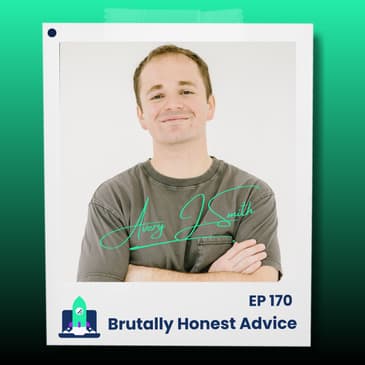
I’ve spent the last 10 years working as a data analyst, data scientist, and data engineer for some pretty cool companies like ExxonMobil, MIT, the Utah Jazz, and others. And the last 4, I’ve spent them teaching others how to land their first data job. My students now work at Apple, Amazon, Rivian, Tesla, and other cool companies.
Let me share the 13 things I wish I knew when I was getting started.
💌 Join 10k+ aspiring data analysts & get my tips in your inbox weekly 👉 https://www.datacareerjumpstart.com/newsletter
🆘 Feeling stuck in your data journey? Come to my next free "How to Land Your First Data Job" training 👉 https://www.datacareerjumpstart.com/training
👩💻 Want to land a data job in less than 90 days? 👉 https://www.datacareerjumpstart.com/daa
👔 Ace The Interview with Confidence 👉 https://www.datacareerjumpstart.com/interviewsimulator
⌚ TIMESTAMPS
00:00 Introduction
00:28 - 1. Your Skills Aren't Holding You Back
01:56 - 2. You Will Get Paid to Learn on the Job
03:25 - 3. You Don't Have to Know Everything
04:27 - 4. Who You Know Matters More Than What You Do
07:08 - 5. Your Domain Expertise Matters
09:20 - 6. Don't Take Job Rejections Personally
12:07 - 7. Data Job Titles Are Confusing
13:29 - 8. Data Tools Matter Less Than You Think
14:38 - 9. The Bookends of Analysis Are Most Important
16:14 - 10. How You Present Your Digital Self Is Important
17:42 - 11. All Industries Experience Cycles
20:11 - 12. Mentorship is the Shortcut to Results
22:11 - 13. You'll Never Stop Learning
🔗 CONNECT WITH AVERY
🎥 YouTube Channel: https://www.youtube.com/@averysmith
🤝 LinkedIn: https://www.linkedin.com/in/averyjsmith/
📸 Instagram: https://instagram.com/datacareerjumpstart
🎵 TikTok: https://www.tiktok.com/@verydata
💻 Website: https://www.datacareerjumpstart.com/
Mentioned in this episode:
Win a FREE spot in my Data Analyst Bootcamp
I'm giving one lucky podcast listener a spot in my data analytics boot camp. All you have to do is register, and you'll have your chance at joining my boot camp for absolutely free. Go to web.datacareerjumpstart.com/giveaway to register. GOOD LUCK!
https://web.datacareerjumpstart.com/giveaway/
💙 Thank you for subscribing & leaving a review
Thanks to YOU we recently became the most popular data podcast out there. Thank you so much for listening. If you haven't subscribed yet, hit subscribe. It costs $0. If you enjoy the show, leave us a 5-star rating on Spotify or Apple. It helps people like you find the show AND it helps us land better guests. Thank you so much for your support.
I've spent the last 10 years working as a data analyst, data scientist, and data engineer for some pretty cool companies like ExxonMobil, MIT, the Utah Jazz, and others. In the last four years, I've dedicated my time to teaching others, learning how to land their first data job, and now my students work at Apple, Amazon, Rivian, Tesla, and some other pretty cool companies. Let me share 13 things I wish I knew when I was getting started. Number one, your skills aren't holding you back properly when it comes to landing your first day job. It's a very frustrating process, especially in today's market. In today's economy. There's lots of rejection, there's lots of frustration, there's a lot to learn. But the majority of your time, employers don't even know how skilled you are. Like if they're hiring for a data analyst position that requires sql, and you think SQL is what's holding you back. The odds are SQL's not holding you back because how does the employer know how good you are at sql? They really don't. Unless you've taken some sort of a technical interview. If you're getting rejected and you think it's your skills, it's actually probably something like your resume or your LinkedIn or your experience that you're portraying on either of those, and you'll want to try to make it look like you know more than you do probably, if I'm being honest. That is what's probably holding you back. Unless you're failing technical interviews or you're doing technical interviews and you're not getting hired, your skills aren't going to get you more technical interviews. The better you are at SQL does not equal how many SQL interviews you have. It's the perception, so you need to make sure that you have a good LinkedIn in a good resume highlighting sql. But to be honest, like if someone's really skilled at SQL and has a bad resume and someone's okay at SQL but has a good resume, this person's going to get. More interviews a lot of the time. I know it's unfair, but that's just how it's number two. You will get paid to learn on the job. I promise that it'll happen in your career. It's happened many times in my career. I've learned power, bi, Tableau, sql, Python, Excel. I pretty much learned everything on the job. Now, that does mean you need to have a base, like you need to know something that will get you hired. Like you can't know nothing, but the odds are you're going to be learning on the job quite a bit because one. It's really hard to know everything in data. Like there's so many different things. Two, it's always expanding. So even if you did know everything today, you will not know everything a year from now, especially with how ai, uh, and just rapid technology change and data is going. Um, and number three, a lot of the times there's like more niche softwares that you'll use that like you probably haven't even heard of. So for example, when I was at ExxonMobil, we used a tool to do data analytics, you could say. Um, and it was called pims, and I'm sure like. No one watching this has ever heard of pims, PIMS. Uh, if you have heard of PIMS for oil, crude basket selection and optimization, let me know in the comments, but my guess is 99.9% of you guys have never heard of it, and it's something I used every day. And there's the equivalent of PIMS for all different industries and all sorts of different niches inside of industries. There's so many tools out there that you've never even heard of that like you wouldn't even bother learning, but you will be using those on the job, maybe as like your primary data analytics tool. So eventually you are going to get paid to learn tools that you don't know, which brings me number three. You don't have to know everything. You don't have to know everything to land your first aid job. I definitely don't know everything now. I'm on, like whatever, my 10th data job or whatever, however you wanna count all my different experiences. Like I definitely don't know everything. Um, I even taught a data engineering course at MIT and I am not that great of a data engineer. I did not know that much about data engineering when I took that role. Uh, and the truth is like, it's okay to not know everything. You won't know everything. And you don't have to know everything. Now you do. You have to know something. Yeah. You have to know something. But the idea that you have to like know every single thing before you can even start applying is just holding you back. So the quicker you realize, Hey, I don't know everything, and that's okay, I'll figure it out. What I do need to know, uh, the sooner you'll be better off. Because that is like the biggest mindset change that will allow you to apply for more jobs, more stretch jobs, things that feel like you're not going to land, but you might land. You never know. Just know. You don't have to know it all. That's it. Four, and this one kind of sucks, but who, you know, matters way more than what you do. Uh, it's not, it's not what you know, it's who you know, right? Like that old adage. Uh, that is so true. Um, I think most of the success I've had in my career has really been to who I know. Um, now I didn't know all those people to start. I made a lot of those connections, uh, from the ground up. And if you don't know anyone, you can make those connections from the ground up too. But like. We just live in a society and a world where opportunity is given to people and people. It's not necessarily merit based. It's more risk free based. And let me explain because it's like when you're trying to fill a position or when you're looking for a leader in a project or you're looking to promote someone, a lot of the times it's like, Hey, well who do we know? Right? Uh, how talented you are or what you've done is only as valuable as the people in power who know about those things. I, I work in a shed in my backyard, and let's say like I cured cancer back here, like I solved the biggest mystery in the world. If no one knows about it, it doesn't really make a difference. Now that is such an accomplishment that if I told someone, it would probably go through the grapevine and then I get interviewed by the local news and I get interviewed by the national news, and then who knows, maybe I'm winning like a Nobel Prize and everyone knows my name and I'm the most famous person on planet Earth. That's definitely possible. Like your accomplishments can be so good. That it makes you known to the whole world, but for the majority of us, that's probably not gonna be the case. And so it's important that the good work we do, do gets recognized by people. And you have to know people in order to get recognized by people. So spend time at work, getting to know your coworkers, getting to know your boss, getting know, getting to know your boss's boss, getting to know your, like boss's, like equivalent on a different organization or a different division or something like that. Like who you know, really matters in your career and will make a really big difference. And if you're not quite in a career that you wanna be in right now, that can be true for networking before you get into a career. So for example, all of my accelerator students, you know, they're new to data analytics. They're transferring from being a teacher or being a delivery driver. Uh, or I don't know, being a scientist or something. Getting to know me is valuable, to be honest, because I have a lot of connections. I have like 150. A thousand connections or followers on LinkedIn, right? I have this YouTube channel, I have my podcast. I know people who are hiring. I can, you know, talk about people in my newsletter. I can talk about people, my students on LinkedIn, so on and so forth. So, oftentimes it is important who you know, and you can start from scratch, I promise you. Number five, your domain expertise matters more than you think, especially in the future with, uh, ai. Um, doing data analytics is really important. We never just do data analytics for data analytics sake. It's not for funsies that we're analyzing data. It's always to make an organization decision to make a business decision, to save money, to save time, to save lives. We're doing data analytics for the the ends, not for just doing it, right. There's not like just a rollout there in the world. That's just like doing data analytics on data analytics. That's very meta, right? All the data analytics jobs are on healthcare data, on financial data, on manufacturing data. And so whatever you've done in the past is really valuable because you understand the domain. You have what's called domain expertise, and if you just brought in like a random data analyst, they would not understand your domain as well as you do. When I worked at ExxonMobil, I have a chemical engineering background, so I studied chemistry, I studied engineering, I studied manufacturing. So every once in a while we'd have these. Company-wide analytics on competitions and anyone could, could enter and you, they give you a data set and they'd say, analyze this data set. And at the time I was pretty, pretty new to the data world and wasn't necessarily the best data scientists or data analysts. I was competing against people who had PhDs in data science, who had PhDs in computer science. We had PhDs in mathematics and I was able to outperform them in these competitions a lot of the time, not 'cause I was smarter than them, or I could make better models or I could code better than them. Because I could relate what little of data analytics I knew to the business problem, to the actual domain better than they could. I understood the rules of like the business. I understood like the rules of science, of, of manufacturing, of engineering, and that really helped me craft better analysis and craft better explanations of my analysis. If you have a background that's not data analytics, that's not statistics, that's actually a good thing. Like your domain can really matter. Now you can transfer domains. That's a thing. People do it all the time. But I just wanna tell you, your domain is valuable and you shouldn't give up on it. Number six, don't take job rejections. So personally, no one likes getting rejected, right? It's never fun whether it's like getting rejected on. A date that you ask or like you ask a girl for her number, uh, or you apply for a job and they reject you, but don't take it personally, especially job rejections in today's economy, because like there's hundreds of applicants for every job. So like every job you apply for, let's just assume there's like 200, 300 applicants. That means like if we say 300 applicants, 299 people are gonna get rejections. So it's gonna happen more often than you think. A lot of the time nowadays with the A TS that stands to our applicant tracking system, it's the suite of tools that recruiters and hiring managers use to try to make it easier for them to decide who's the right candidate. The A TS sucks, you guys, it's not very good. It's like not a very good piece of technology. I'm looking forward to seeing over the next five, 10 years how it becomes better. But right now it kind of sucks and a lot of the times you're not even getting your resume seen by human. It's just a computer, a silly computer who's looking at your resume and is like, eh, I don't think this resume is very good. But it doesn't really know what a good resume is. We're in this world where we're getting rejected all the time by computers and it makes us feel bad, but like the truth is that like these computers aren't very smart, uh, and they're not making good decisions to be honest. They're making decisions that limit that help hiring managers and recruiters spend less time, but not necessarily make the optimal decision. And the truth is that like out of, um, I dunno, 300 candidates, I interviewed a hiring manager one time who I think had like 250 applicants and she was like, yeah, I think 50 of them would've been great. So like literally I'll say 20% would've been great candidates and if they would've hired them, it would've worked out. So like even, even a lot of times you're getting rejected. You could have done the job and you could have done really great at it. It still sucks, I realize that. But I think what sucks more is when we take the rejection so personally that we kinda get depressed and we stop applying for jobs and then we never actually change our career. I don't want that to happen to you. So like, please stop taking the rejections. So personally and just realize it's just a silly computer making a silly decision. That's why networking, what we talked about earlier, who you know is really important because. If you know the right people, you can skip the whole a TS altogether and just get an an interview and then show your personality there and explain everything. Humans can like understand the totality of a candidate of a human candidate, but computers, they just really look at resume and it's like they're only seeing, I don't know, 10% of who you actually are and what you're actually capable of. It's just silly. You guys don't take it personally. Number seven, data tiles. They're super confusing. The titles of different data jobs are all over the place. Obviously. There's like data scientists, data analysts, data engineer. Those are like pretty cemented and pretty straightforward. But I've seen data science analysts, I've seen data analytics scientists, like I've seen so many different roles. My job at ExxonMobil was for a while was optimization engineer. That doesn't sound data E at all, but I really just built models and. Power BI dashboards the whole time I was in that role. So like you just can't judge a job off of the job title. Sometimes job titles are are weird because the company just doesn't know better and they're kind of just making it up. Other times, like there's just no industry standards. So it's just kind of all over the place. But just know that like you need to be looking at the like requirements and making a judgment yourself on what type of job this actually is. So. Be looking for keywords like sql, Excel visualizations, mathematical models, machine learning and stuff inside of the description, and not just taking the title for what it is. Like. You need to be coming up with your own titles for every job description that you read because they are going to be quite different. So they're really confusing. Don't stress it. Just know that that exists. Number eight, data tools matter less than you think. What I mean by that is I think now, um, I'm pretty decent at a lot of different data tools. I think my best data tool personally is Python. I'm pretty good at Python. Next might be R for me, and then after that it might be Power bi, Tableau, sql, Excel. But there's other ones that I can do. I can do matlab, I can do JMP. I could do JavaScript if I had to, I could do D three. I could do pencil and paper, like I could analyze. So I could use a, I could analyze data with like all sorts of different tools. And what I mean by this is like if you're given a business task, like, okay, we need to, we wanna know how many products we're gonna sell next December. I think I could do that in Tableau, sql, Excel, Python, r Matlab, jump. Like I, I could do it basically in a data tool. So I would focus maybe a little bit less on the data tools and more about concepts. If you get really good at one data tool, you could probably just use that data tool to pretty much do everything. So I don't think data, tools, learning them all especially is as important as you think they are. Number nine, the bookends of analysis are the most important. And what I mean by bookends is think of it, think of data analytics as like a sandwich, bread, meat, bunch of other stuff, vegetables, condiments, bread, right? The breads, I think are the most important part. I think they're going to become more important with the explosion of AI and data analysis. What I mean by the bread is like talking to stakeholders at the beginning and talking to stakeholders at the end. Because once again, we're not doing data analysis for funsies, for data analysis sake. We're doing it to make impact and to change lives, save money, save time. If we don't do a good job at the beginning of talking to stakeholders, we're gonna do analysis in vain. We're gonna probably do the wrong analysis for the wrong reasons and it's not gonna be useful. So the more we talk to stakeholders or, or let's say that it is even useful, it might not be adopted very well, it might not be used like so many. You hear so many people about building dashboards that go on to die, never be used. And I think a lot of the times it's not. It's because they didn't spend enough time upfront explaining to the stakeholders, okay, what do you want? Why do you want that? Let me create the system or service that works best to solve your problem. Then secondarily the ending where you've actually done the analysis, you need to tie it back to the business, show them how to use it, make sure that they can trust it, because if you don't do that, once again, you're gonna be doing data analysis in vain. All the work you've done is just gonna not go anywhere, and that happens a lot. Don't feel bad if it happens, but if it is happening, spending more time on the front end or the back end is probably the solution. Number 10, how you present your digital self matters more than you present your physical self. And what I mean by that is. Your perception is really important. How you're perceived is probably more important than how you actually are. And once again, I kind of hate saying this. I'm not saying to cheat, I'm not saying to lie, I'm not saying looks matter, but they kind of do. Um, in, before you get a job, like on a resume in LinkedIn, as well as when you're in a company, the work that you do is probably less important than how your work is perceived. That sucks, but it's just the game you're going to have to play in your career. And if you choose not to play that game, I think you'll suffer. So I think it's a game worth playing. So that means like you need to present yourself well on LinkedIn. You need to present yourself well on your resume. You need to make sure that your boss likes you and your boss's cousin likes you, and you need to make sure that like you're talking and you're, you're getting seen because that's what's important. If your work is important, but if it doesn't get seen, it doesn't get used. It's honestly not important. And in today's economy, you have to take care of you and your family. And if that means you need to be perceived as being a good actor, a good professional, as a net positive to your team and organization, then you should spend the time and the resources necessarily to do that. So that would be when you're doing something, make it known, tell people about it, share it. Don't just do your work in silence. If you do your work in silence, I think you and your family suffer. Number 11, all industries experience cycles. Uh, I think we're in a cycle right now. I think we're in a very revolutionary cycle. I think AI is really changing the game, but all industries go through disruption and they go through peaks and valleys. Let me kind of explain. I worked at ExxonMobil during 2020. Now, what happened in 2020? Everyone. Oh, COVID. Good job. Class COVID happened in 2020, right? And what happens? Especially the beginning part of COVID March, April, may, June. We stopped going places. We stopped going to work. We stopped going to the movies, we stopped going to sports games. We stopped traveling. What do you need to travel? Oh, gasoline, jet fuel. Who makes gasoline and jet fuel? ExxonMobil. So it was a really bad time to work at ExxonMobil because our, no one was buying oil and no one was buying gasoline. So those prices went down quite a bit. If you remember, I lived in Texas when I worked for Exxon. I think one time I got gas in Texas during COVID for less than $2 a gallon, which was like very, very low. Now in Utah, I'm paying like 3, 3, 5, I think per gallon, so almost half, right? That was not good for ExxonMobil. There was layoffs. The future felt really grim. Life was not good. It seemed like things were, were not going very well now. Compare that with a company like Meta. Well, if we couldn't go travel, we couldn't go to sports games. What did we do to entertain ourselves? We sat on TikTok and Instagram and scrolled all day, uh, which was awesome because that meant that they could charge a lot more money and get a lot more advertisers, a lot more eyeballs were on their apps. And so meta stock went up as Exxons went down, and, uh, yeah, that meant they hired a lot, they hired a lot more people. Um, then like two or three years later. When things were back to normal, there was less eyeballs on Instagram 'cause more people were driving, more people were flying on vacation. So Exxon Stock came back up and meta stock went down and they did layoffs. So here's the truth. Data analysts, data scientists, data engineers, they work in all different industries and there's gonna be peaks and valleys for different industries. And you sometimes just have to wait and be patient and not freak out. And so that's what I'm trying to do right now. I don't think it's worth freaking out. I think it's just worth being patient for all these ai. Dust to settle and figure out where we'll be in one to two years. I think AI is a big change, but I kind of just see it as a cycle. Alright, number 12, mentorship is the shortcut to results, and this is kind of going back to the who you know is really important, but in my career, having mentors has made a really big difference because mentors are people who have gone through what you've already gone through and can tell you the path that you should take. For example, I've been doing YouTube videos for about four years now. Um, but you probably, if you're watching this or listening to this as a podcast, you're probably listening to me for the first time in 2025. If I had to guess. Lemme know in the comments if I'm wrong, and when I say lemme know in the comments, I'm really talking to my YouTube people. Where are you guys at? Go to the comments right now. But also if you're listening on Spotify, Spotify has comments too. You guys should try those there. If you're listening to another podcast, there's probably not podcasts or probably not comments there, but, um. I wanna know, like, are you new to my worlds? Because you probably are. And one of the reasons is, is I got a mentor last year. His name's Jay Klaus, uh, and he makes a lot of YouTube videos. And over the last year or so that I've kind of been in his world, I think I've gone from like 15,000 to 45,000 subscribers on YouTube. So that's like 30,000. So I've basically doubled, no, I, I guess, tripled my YouTube in the last year. It was mostly 'cause I talked to someone who knew what they were doing and they gave me good tips. And the same is true for you in your, your career as well. Like if you can find someone who's already been there, done that, I think they'll have a big impact. It's so funny because it's not like something that people talk about very much and it's not like, it's kinda like an abstract thought, but I think it will make a really big difference in your career if you have a mentor. So my suggestion is if you're trying to land your first data job, find a mentor. Um, if you want mentorship, I have the accelerator program. That helps people land their first data jobs. If you're already in your role, find someone at work, find someone at work who's one to two steps ahead of you. Taking to coffee, taking to lunch, talk to them. Ask them like what they would do differently, like what they've done well and what they maybe had done poorly. Tip number 13 is you'll never stop learning. Data analytics is constantly evolving, and if you stop learning, that is when your career will die. But as long as you're willing to learn, I think you're going to do really well in this career. And I think that's one of the things that's made a big difference in my career is I'm always willing to learn. In fact, I read five pages every single day, so I am constantly learning something. Uh, and I spend a lot of my time even at work trying to read, watch videos of things that are coming out. I also experimenting a lot. I'm a big experimenter where it's like, okay, I've kinda heard about this thing. I don't really know it yet. I'm just gonna try to open it up and see if I can use it. I did that recently. With MCP, I didn't really know what MCP was. Model context, protocol. And then I, I tried basically using Claude to build some, uh, data pipelines and I was like, oh, I totally get MCP and I totally get why it's awesome. So when you hear about something, like, for me, the best way to learn about it is to like get hands on experience actually doing it. So there you guys have it. If you enjoyed this, please hit subscribe and uh, we have a new video coming out every single week. Thank you guys for watching. We'll talk to you soon.